Showing posts with label Diet. Show all posts

Sunday, October 11, 2015

So, What Do You Eat?

I have eliminated white flour, potatoes, and white rice from my diet. It's not that I don't like baguettes, french fries, and rice, it's because they don't like me, or rather, they cause symptoms I'd rather not experience.

When I make baked goods, or need to replace white flour in a recipe, I generally reach for Quinoa flour. Sometimes I’ll add oat or buckwheat flours, too.

For store-bought breads I stick to sprouted varieties. For rice or potatoes, I substitute Quinoa, Wheat Berries, brown rice, (I eat Basmati rice even though it's white because it is a slow sugar uptake into the bloodstream). 

I avoid dairy, too. I go for the goat when it comes to cheeses, sheep or goat for yogurt, and soy for milk. LaLoo makes amazing ice cream from goat's milk. My favorite is Rumplemint - yum! I love French toast, and by using sprouted bread and soy milk, I can have it. Pancakes, too, by using Quinoa and other flours, and soy milk.

There are some things that I love, but I can't eat because it sends me into a sugar shock, not fun, watermelon, for example. There are some things I eat and it seems like I shouldn't, maple syrup, for example. Maybe because I pair it with food items that are high in fiber and I only use a little bit. It's okay to have things like pasta or rice noodles on occasion, and I enjoy red wine on occasion, too. I simply avoid foods that have a high glycemic index because they either triggers various neuropathies or induces a sugar shock, brain fog, sweating, muscle weakness, or sleepiness. Not so much fun, but totally workable and easy to interact with water, exercise, sleep, or some combination thereof, depending.

To help me figure out what I can or can't have, or discover after the fact why I'm having a reaction, I check out an online GI database.

Related Post:  (non) Dairy QueenGrains in Focus

Related Links


Friday, July 10, 2015

Crouching Sugar, Hidden Glucose


I stumbled on my current eating strategies by accident. I made note of the foods with a high glycemic index, and eliminated them from my diet. I'd like to think it was an insightful move, a new way of thinking! But no, others have come before me; in fact, they've even wrote the book. While I might not be as original in my thinking and strategies as I previously thought, I still feel proud of myself for connecting the dots. Now, had I read the book 20 years ago, and had followed the writer's advice, would I have avoided the insulin resistance portion of PCOS, maybe avoiding it completely? I think the answer to that question is a resounding yes, but...  I doubt I would have followed the strategies, because I was 20 years younger and not really interested in the long-term health ramifications.

Knowing what I know now, and having children on whom to impart my hard-won wisdom, I'm all about showing how the sugar in our diets, not only refined white sugar, but the hidden sugars in whole and processed foods, have negative, long term health affects. Whether or not I read the book, the guiding principle resonates:
"The Sugar Busters diet is a diet focused on eliminating foods containing refined carbohydrates such as refined sugar, white flour, and white rice, as well as naturally occurring carbohydrates rating high on the glycemic index such as potatoes and carrots." Wikipedia
Regardless of the state of one's pancreas, constantly flooding your bloodstream with sugar, no matter the form, places a tremendous burden on one's body. For a teen, who feels invincible, that statement would fall on deaf ears. Heck, I ignored the "sugar is bad" and "breakfast is the most important meal of the day" adages for nearly 50 years! It wasn't until I felt the results of my poor food choices, and had to make changes or face a serious decline in life quality, did I sit up and pay attention.

I think it's high time I read Sugar Busters.

Related Links

Thursday, January 29, 2015

Clawing out of Depression's Grip

Not long ago, depression had me in its insidious grip, squeezing every shred of self confidence with which I manage to shroud myself. Clawing and writhing my way out of its clutches leaves me first pondering how I found myself there in the first place, and then tending to the wounds it inflicted. These wounds, some of them merely scratches that will heal quickly; others deeper with darkening bruises, which will turn to sickening green (how I feel about them, and sometimes me), and then fade completely.

With the significant changes I've made in my diet and the increase in exercise, I definitely experience fewer depressive states. When I do have them, it seems that they are still intense and I still feel anxious, but I think that the anxiety is a result of the tachycardia I experience during the luteal phase of my cycle, which is also when I tend to succumb to depression.

After my hysterectomy in another couple of weeks, I won't have ovaries, ergo, no luteal phase. So, might it be possible that without the surge of progesterone and testosterone, I will no longer experience tachycardia? Without the tachycardia, will I no longer have that feeling of anxiety? I don't think that my depression will be eliminated completely, but wouldn't it be lovely if it were simply a shadow skittering across my mental landscape rather than the monster I described above?

Thursday, October 23, 2014

Glycemic Index versus Load

Glycemic index and glycemic load helps you understand how foods affect both your blood sugar and insulin levels.

When you eat high-glycemic index foods, you will experience higher and more rapid increases in blood glucose levels. Conversely, when you eat low-glycemic index foods, glucose enters your blood stream at a slower, sustained pace resulting in lower insulin demands.

The lower a food's glycemic index or glycemic load, the less it affects blood sugar and insulin levels. Focus on foods with a glycemic index of 55 or less and learn which foods raise your blood sugar levels, trigger your symptoms, or both.

Oh, and just because a food has a low index or load level, doesn't mean it's a wise choice. Some candy bars have a relatively low index, but their nutritional value is negligible.

Related Links

Monday, October 13, 2014

Symptomology 101

Throughout these posts, I have mentioned symptoms and associated many of those symptoms with possible root causes. I've made dramatic lifestyle changes and I'm experiencing either a resolution of or a decrease in the intensity of my symptoms.

I call that success!

I decided to take a moment to celebrate my successes and speculate on which life change may have contributed to the improvement of symptoms.


Acne
Significant changes in not only what I eat, but when and how much I eat have contributed to completely clearing up acne breakouts. I'm positive that going dairy free, and eliminating potatoes, rice, and white flour, have contributed to eliminating this particular malady.

Excessive Sweating
While I haven't found the off switch for this lovely symptom, it is greatly reduced. I've noticed that the onset is usually when my blood sugar levels are high that I'm particularly susceptible to sweating. Further, when I'm exercising my sweating is within acceptable limits, so long as I drink plenty of water before, during, and after an activity. I'm fairly sure that eliminating caffeine and drinking buckets of water have been key to alleviating this fun symptom.

Assorted
Some of the following symptoms I know are addressed by using a CPAP. Others depend on my blood sugar levels, amount of daily excercise, and my stress levels. Still, significant improvements overall.

  • Anxiety reduced
  • Depression reduced
  • Daytime fatigue reduced
  • Forgetfulness reduced
  • Lack of energy during the day reduced
  • Loud snoring gone!
  • Mood changes reduced
  • Morning headaches reduced
  • Sleepiness reduced
  • Slower reaction time reduced
  • Restless sleep reduced
  • Recurrent awakenings reduced
  • Insomnia reduced
  • Vision problems reduced
  • Waking up with a very sore or dry throat gone!
  • Waking up with a choking or gasping sensation gone!

Related Links

Sunday, October 12, 2014

Caffeine Quandary

According to the Americian Academy of Sleep Medicine:
Caffeine reaches a peak level in your blood within 30 to 60 minutes. It has a half-life of 3 to 5 hours. The half-life is the time it takes for your body to eliminate half of the drug. The remaining caffeine can stay in your body for a long time.

Well, that is an eye-opener.

How long does the remaining caffeine stay in your body?

That depends on you, and your state of health. What I found was a range from as little as 14 hours to as long as 100+ hours. Doing the math, if I consumed 100 mg of caffeine, then I'd get that buzz within an hour. About five hours later, I'd still have about 50mg floating around in my system. By the time I'm ready for bed, I'd still have about 50mg doing the back stroke in my bloodstream.

So, let's say I snag a latte from Starbucks one my way to work at about 7 am. That gives me about 150mg of caffeine buzz. For my 10 am break, I'm ready for another latte. Let's do the math:

Time
Caffeine IntakeHalf LifeAccumlated
7 Am
150mg
75mg
75 mg
10 Am
150mg
75mg
150mg
10 pm
-
-
150mg

It looks to me like, by the time I'm ready to go to bed, I could have as much caffeine in my system as I did when I drank my first morning latte. Over time, a lot of caffeine can have accumulated in my bloodstream. For many people, accumulated caffeine doesn't have an affect. I remember reading somewhere, and now I can't find the site, that caffeine creates an insulin-resistant-friendly environment. Well, okay then. As I'm working diligently toward reversing insulin resistance so that I don't end up permanently with type 2 Diabetes, I will forgo caffeine, gladly.

Related Post:  Coffee Calamity

Related Links

Monday, September 22, 2014

System Flush


Research cited by the New York Times shows when your body is dehydrated, your kidneys go all Chicken Little on you. No, the sky isn't falling, yet those panicked kidneys retain water and release a hormone that raises blood sugar. For those of us who are tasked with driving our glucose levels down, it makes sense to do what it takes to keep our kidneys from pushing the panic button and releasing that pesky hormone. Fear not, Chicken Little kidneys, we know of a magical elixir that will bath you into calm bliss: Water.

Water dilutes the blood and flushes out glucose, among other things, from your bloodstream. Evidence suggests that drinking as little as .5 to 1 liter, or 17 to 34 ounces, will help you with attaining homeostasis. I drink a lot of water. On good days, my water consumption goes beyond 2 liters, or over 64 ounces. On other days, I stay in the range noted above. I drink water about .5 liter or 16 oz and eat a small protein/carb duo to stave off my blood sugar spike as soon as I get out of bed in the morning. I'm happy to report that this small change has greatly reduced the excessive sweating symptom I talked about in the One Hot Mama and Reverse Symptomology posts.

By chance I ran across a post in a forum that offered a suggestion for when blood sugar levels spike. My signs of hyperglycemia may include:
  • Excessive sweating
  • Fatigue (weak, tired feeling)
  • Headaches
  • Difficulty concentrating
  • Increased thirst
  • Frequent urination
  • Decreased vision
When I experience any or a combination of the above, I flush out the sugar by drinking 16 ounce water quickly. I wait five minutes and drink another 8 ounce glass of water. Soon after, I'll pee, and my blood sugar levels start to decline. I keep drinking through out the day, as well. Keeping well hydrated has kept me cool and comfortable for several weeks now.

I'm thinking I'm on to something.

Related Links

Sunday, September 14, 2014

Size Matters


I'm talking about portion size. What did you think I meant?

There are fact and figures, charts and diagrams, showing how we eat larger portions now than we did 20 year ago. There is considerable fodder out on the interwebs discussing Portion Distortion, and with it a plethora of images describing how to estimate serving sizes using your hand for protein, carbohydrates, fruits and vegetables, and fats. I'm not going there. Instead, I'm looking at the cause and effect of what I eat and how my body reacts.

I'm noticing what happens to my body when I eat small servings versus large servings, even if it's a salad packed with veggies. If I keep to "dynamic duos" every two hours or so, my blood sugar doesn't spike or stay in an elevated range. My dynamic duos consist of things like Almond butter and a banana, apple and goat cheese, Qunioa and broccoli. Whatever the combination of whole grain, protein, fruit, or vegetable, when I keep it to about one cup, I don't flood my system with large quantities of insulin.

I'm noticing what happens to my body when I eat watermelon. Ohhh, it's so not pretty. Remember in prior posts how I whined about excessive sweating? I get that within 20 minutes of eating watermelon, in addition to brain fog and muscle weakness. I'm about to whine again. First cheese, then coffee, and now watermelon? Say it isn't so!

It's an interesting paradigm eating to nourish my body and minimize symptoms rather than eating to lose weight. I'm thinking that I can use the immediate biofeedback that insulin resistance gives me to continue to eat in ways that is right for me, thus healthy.


Related Links


Tuesday, September 9, 2014

Coffee Calamity


There is quite a buzz out there in the interwebs for those with insulin resistance on the topic of coffee, specifically the caffeine in coffee, giving rise to blood sugar levels.

That's just not okay. I love my coffee! I have great need of coffee. I'm a troglodyte without coffee!

To say that I'm taking this news badly doesn't even come close to my state of abject horror at the thought of no longer partaking in my beloved beverage. There must be some mistake. Surly I can find a loophole somewhere... but no.

I know the truth of caffeine and what it does to me and my blood sugar by the neuropathic response I get whenever I drink coffee, or anything with caffeine, for that matter. I was happy ignoring the symptom. Didn't matter that I have a reaction to drinking my (legal) drug of choice. It didn't matter, that is, until I read the dreaded words on the Glycemic Index. Yup, coffee is listed in the red zone. Not only did I have physical evidence that coffee spiked my blood sugar, (which I chose to ignore), but now I have it in writing, too. Somehow, that just made it too important to ignore.

What am I going to do? I just recently switched to soy lattes because dairy does a number on me. Now I have to give up lattes altogether? Nooooo!

Turns out that while that caffeine isn't a good thing for me, decaf coffee isn't a bad thing. As I switched to soy lattes with nary a second glance, I think I can make the switch to decaf soy lattes, eventually. I'm not saying that I can go cold turkey, no way! Starting tomorrow, I'll ask for a split, or 1/2 decaf soy latte. Eventually I'll get to all decaf, sooner rather than later.

Nothing is certain except for change, eh?

Related Post:  Caffeine Quandary

Related Links


Saturday, September 6, 2014

Agnsty, Not Only for Poets and Teens

I love that word. When I looked it up, I found this definition in the Urban dictionary:
Generally it involves the feeling of not being understood by anyone and that the person is alone in the world.
The Merriam-Webster free online dictionary has this nugget:
feeling, showing, or expressing anxiety, apprehension, or insecurity
My teens are in the former group, which makes total sense, because, well, they're teens. I'm in the latter group, my guess is because I'm neither a poet nor a teen (although there are times when I act like one). Anxiety and its cohort, depression, have been my companions for quite some time. Probably about the time I started infertility treatments. (I am blessed with three amazing kids. More on that story, later.) However, anxiety and depression have been particularly present in the last few years. Probably about the time insulin resistance reared its ugly head, unbeknownst to me. The good news is, now things make sense in ways that baffled me before. The bad news is, I must take better care of myself. I mean, you know, like put myself first sometimes. How bad can that be?

I'm curious, though. How much of my anxiety and depression are health related? As I ease into a healthier lifestyle and continue to put myself first in positive ways, will my depression and anxiety lessen? Will I be in a position where I can cut back on my "happy pills?" These are questions I hope I'll have answers (in the affirmative) to in the near future. It looks like, by continuing down the path of eating healthy and exercising, I could very well reverse insulin resistance and its unsavory symptoms in about a years time. I tend to be a rather goal-oriented individual, so of course I'm writing the goal of eliminating the whole prediabetes thing in gold letters on my bucket list.

I have found that sleeping better, thanks to the CPAP machine, has improved my over-all state of being. I'm positive that exercise is also responsible for helping smooth out my rough edges. Therefore, it must be possible that eating well, and managing or eliminating the massive levels of insulin wrecking havoc on my body, may very well contribute to reducing my angsty depression, as well.

That's my story, and I'm stickin' to it.

Related Links

Wednesday, September 3, 2014

Teal Ribbon Cysterhood

Yesterday I became an official, card-carrying member of the PCOS community. On the one hand, I feel pretty smart for figuring it out for myself. On the other hand, it's sucks and I'm mad-as-hell that I have a syndrome, which is essentially a catch-all phrase that experts use when they don't have a clue what to do with you. Great, just lump a bunch of us who share similar symptoms together, scratch your collectives heads, and label us with "syndrome." Yeah, that's me throwing a cyber tantrum. Fat lot of good it does, aside from letting off a bit of steam, huh?

Speaking of fat, the experts say that loosing just 10% of your weight can reduce the severity of PCOS symptoms. That sounds easy, yes? Well, as easy as it is for anyone to eat healthy and exercise. Only, with the added challenge that the PCOS syndrome can include that lovely increase in weight. What the heck, what's life without a few challenges, right? So, what exactly can one with PCOS eat, and what are the things that one should avoid?

I explored a cross section of PCOS diets out there, and most all of them agree that becoming the next non-Dairy Queen is the next best thing to sliced bread. This was a bit disconcerting, as I grew up believing that milk has something for every body. Is it possible that the dairy industry lied to me? To us? Shocking! Well, not really, they are in the business of selling milk, cheese, and ice cream. When it comes to cheese and ice cream - oh, and hot chocolate! - avoiding dairy hits me the hardest. I mean, try and order a bean and cheese burrito without the cheese, or a quesadilla, for that matter! I can do pizza sans cheese, but then there's the white flour used in the crust, and white flour is another no-no.

That does make things like eating out a problem. Heck, that makes eating in a bit of a challenge, too.

For me, losing weight and eating healthy means limiting my personal choices, thereby making it easier to shop, prepare, and stay on track. I've taken to wearing a pedometer again, and that helps me increase my daily activity, as I challenge myself to reach 10,000 steps every day. I've hit it a couple of times so far, yay me!

Related Links


Tuesday, September 2, 2014

(non) Dairy Queen


I have crowned myself a non-Dairy Queen. No coronation, ballgown, nor tiara, heralded the occasion. (Curses! Someday I'm going to get a tiara!) I have discovered that keeping dairy off my plate and away from my stomach helps minimize my symptoms. The challenge came when I wanted to find substitutes for cooking with, and adding to coffee, which I talked about in the Critical Mass post. There are lots of alternatives, but which is the best choice, packs the most protein and contains the least amount of sugar? Then, of course, I must ponder what is satisfying, too.

I'm a bit of a show me the data kind of gal, so I searched the interwebs for facts and figures. Wow! There's a lot of stuff out there, from manufacturer's nutrition data to blogger's personal findings, to recipe re-dos using milk alternatives. While all that data can be overwhelming, I slogged through a great deal of it. I decided that I, personally, needed to focus on what works for my lifestyle, digestive track, and personal taste preferences. Oh, and I focused on milk alternatives that are high in protein and low in sugar. Soy has become my go to milk substitute. However, when it comes to satisfying my sweet tooth, I head for the Almond milk. I'm not a fan of Coconut milk, not even remotely. That said, I keep it on hand as I can use it to add a lot of sweet to whatever I'm making without inducing a sugar spike.


BeverageCaloriesSugarFatProtein
Almond Milk4003.5g1g
Coconut Milk5005g1g
Soy Milk801g4g7g

My figures are for the brands I use, based on an 8 oz serving. Your values may vary.


Related Links

Monday, September 1, 2014

Grains in Focus


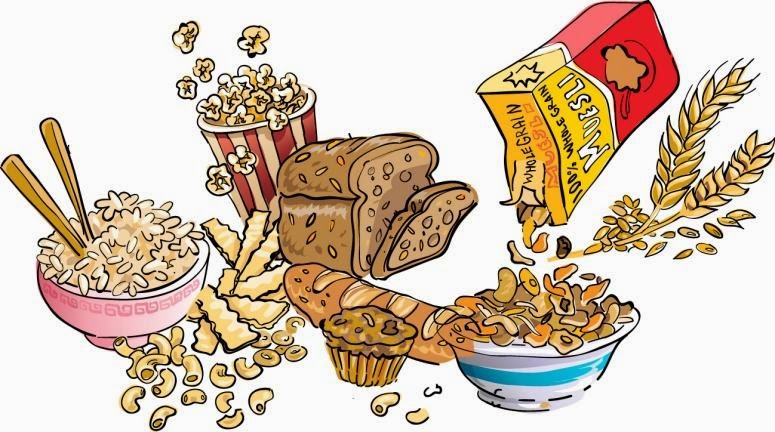
The first thing I did when I realized that I was on the brink of type 2 Diabetes, was figure out what I could eat, and what I should limit or avoid completely. It wasn't too hard to include whole grains. I use a Tabbouleh recipe as a starting point, and then change up the grains and toss in whatever I have in the fridge and pantry for interest and variation. Of the go-to grains listed on the American Diabetics Association website, I gravitate toward the following:
  • Brown rice 
  • Bulgur (cracked wheat) 
  • Buckwheat flour 
  • Whole grain barley 
  • Whole grain corn/corn meal 
  • Whole oats/oatmeal 
  • Wild rice 
  • Quinoa/Quinoa flour

Presently, Quinoa is my staple and I always have a batch ready to add to whatever I'm making. 

I like to stir-fry barley, seasoning it with simply with salt and pepper. My oldest daughter, who is an extremely picky eater, has decided that anytime I make that particular dish, that I must make extra so that she can take it for lunch the next day. Ding, ding! We have winner. 

I've completely eliminated anything made with refined white flour, white rice, and limited my potato consumption. Which is challenging, but doable. Do I look longingly at the chili cheese fries my son makes? li'l bit. Do I salivate when my youngest daughter makes ravioli? On occasion. However, there are lots of ways in which I can enjoy the foods I love by swapping a starchy vegetable or a refined white flour product with a whole grain. I'm thinking I might test out this theory by replacing the fries with barley. It isn't chili cheese fries per se, but I think it might just be a satisfying substitute.

With a little bit of planning, a dash of imagination, and a pinch of surfing the interwebs for recipe possibilities, it's pretty easy to include whole grains in your daily diet.


Related Links

Friday, August 15, 2014

Critical Mass


Try as hard as I might, I couldn't find a body positive  image that conveyed the message that I am looking for. I found this one, but it objectifies a woman's body, she is essentially a tree. It's kinda cool, but not what I am looking for. I found other images with the standard tropes of large, curvy ladies eating ice cream and slim, muscular ladies working out. Bleck! How can I talk about such a weighty issue without proper illustrations to inspire and guide me?

Okay, well here goes: today's topic is weight. Managing weight, loosing weight, being okay with the weight we are is only a teeny portion of the discussion.

Just for today, let's say that we've made peace with our bodies, and we're simply focused on understanding the role weight plays as a symptom of PCOS.

Yeah, I think I can work with that.
Yes, extra weight on your frame for your height and age can cause all sorts of problems. With PCOS, I experienced a sudden weight gain that settled mostly around my belly and I wasn't able to lose it. Here's the kicker, I was eating healthy at the time. Color me confused. I continued to eat healthy until a series of unfortunate events, and then I went on a see food diet. You can imagine what that did to my waistline. The pending PCOS diagnosis makes changing my eating habits a must.

I'm not following any particular fad diet, nor am I overly concerned about getting into my "skinny size 8" jeans (which I turned over to Goodwill decades ago, but I digress). Fortunately for me, I work with ladies whose eating habits I simply emulate. Easy peasy. One lady eats a banana dipped in a mixed nut butter practically every morning. So yummy! Another lady brings to work salads with interesting and flavorful ingredients. With a little planning and just 5 minutes in the morning, I carry with me to work a salad concocted of greens, whole grains, goat cheese, and whatever protein we ate last night. I toss in a couple of extra pieces of fruit, and viola! I'm ready for the day.

Yet another lady at work orders soy lattes. The barista at the cafe (I know, we're so spoiled where I work!) let me taste the soy milk they stock. Yummy. Between listening to my friend order espresso floating in soy bliss and tasting said bliss, I quickly became a soy convert. That said, I'm trying not to over do the soy, so I've added Almond milk to the mix, too.

The worst news about this PCOS gig is the havoc dairy wrecks on my body. Essentially, the cheese that I crave beyond reason is off limits. Oh, just great! Happily, I'm a big fan of goat cheese, so now I just stock the fridge with variations on a theme of goat cheese. The awesomely cool thing is that both my son and husband are fans of goat cheese, and that makes it even more enjoyable. 'cuz you know, I'm not the family freak who can't eat the same things my family eats.

So there it is, my diet secret. Lean protein, lots of fresh fruits and vegetables, topped off with whole grains. Oh, and I pretty much got rid of anything white: potatoes, rice, and flour. Once the weather cools, I'm going to experiment with baking using Quinoa and Buckwheat flours.

Related Links