Showing posts with label PCOS. Show all posts

Wednesday, July 29, 2015

All That Glitters

For years I've had an allergy to metal. I know there are many who are similarly afflicted. Hang tight, here's where the story becomes interesting.

A few weeks ago, a close friend gifted me with a lovely gold bracelet from Greece. It's unusual, beautiful, meaningful. While I was fumbling with the clasp, I gave a mental shrug, thinking I will wear it until the rash develops. After a few hours, I noticed... nothing. No itching, swelling, or reddening of my skin. After a day, I noticed the same nothing. I wrote it off thinking I haven't worn metal in a couple of years; maybe it will take longer before symptoms appear. At the end of the week, I was convinced that I had in my possession a magical bracelet. There could be no other explanation. Clearly, my friend has mystical powers! I wore the bracelet, made of metal - which I am allergic to - for over two weeks without removing it, and I remained symptom-free.

I decided to push my luck, and I gave earrings a try. Usually, I'll feel discomfort immediately. Nope, I felt neither irritation nor pain. I wore earrings with metal finding for over a week, and my ears stayed infection-free.

What the heck!?!

I decided that there must be a connection between allergies and illness. Specifically, I believe there is a relationship between PCOS and allergies. For me, now that I'm eating a high protein, low sugar (and very low glucose-rich foods), it seems like my body can now handle wearing metals.

Does this mean I get to go earring shopping?

Yes, yes it does.

Related Links

Thursday, July 23, 2015

CPAP and Gas, who knew?

I noticed an increase of stomach air when I began using my CPAP machine. Over time, that diminished. Then, after my hysterectomy, it returned with a vengeance and hasn't decreased. Is there a correlation? I thought so, at first. Turns out, I had accidentally increased the pressure and hadn't noticed. Go figure. As it happens, one of the causes of increased belching and flatulence is a pressure setting that is too high. 

That's an easy enough fix, and it did help enormously! 

Even so, the topic of CPAP gas can be bigger than simply adjusting the air pressure setting on your machine.

When you swallow the pressurized air from CPAP, you may notice:
  • Burping or belching
  • Flatulence
  • Bloating
  • Stomach pain
While none of these symptoms are life-threatening, they can be pretty embarrassing. If reducing the air pressure setting doesn't help, you may want to try a full face mask rather than the cute nose option. 

Related Post:  A Breath of Fresh Air

Related Links

Friday, July 10, 2015

Crouching Sugar, Hidden Glucose


I stumbled on my current eating strategies by accident. I made note of the foods with a high glycemic index, and eliminated them from my diet. I'd like to think it was an insightful move, a new way of thinking! But no, others have come before me; in fact, they've even wrote the book. While I might not be as original in my thinking and strategies as I previously thought, I still feel proud of myself for connecting the dots. Now, had I read the book 20 years ago, and had followed the writer's advice, would I have avoided the insulin resistance portion of PCOS, maybe avoiding it completely? I think the answer to that question is a resounding yes, but...  I doubt I would have followed the strategies, because I was 20 years younger and not really interested in the long-term health ramifications.

Knowing what I know now, and having children on whom to impart my hard-won wisdom, I'm all about showing how the sugar in our diets, not only refined white sugar, but the hidden sugars in whole and processed foods, have negative, long term health affects. Whether or not I read the book, the guiding principle resonates:
"The Sugar Busters diet is a diet focused on eliminating foods containing refined carbohydrates such as refined sugar, white flour, and white rice, as well as naturally occurring carbohydrates rating high on the glycemic index such as potatoes and carrots." Wikipedia
Regardless of the state of one's pancreas, constantly flooding your bloodstream with sugar, no matter the form, places a tremendous burden on one's body. For a teen, who feels invincible, that statement would fall on deaf ears. Heck, I ignored the "sugar is bad" and "breakfast is the most important meal of the day" adages for nearly 50 years! It wasn't until I felt the results of my poor food choices, and had to make changes or face a serious decline in life quality, did I sit up and pay attention.

I think it's high time I read Sugar Busters.

Related Links

Friday, February 6, 2015

Numbers Have Genders

Well, they do when it comes to test results.

The health management organization to which I belong lets me log on to their portal and see all of my test results. For this data gal, that's like being given the keys to the candy store! While some candies are sweet, others are tart, and still others leave a downright bitter taste in your mouth.

I was looking through the list of my pre-op labs, and noticed that the results of a test for my Kidney function, 51, fell into the mild to moderate Kidney damage zone. I decided that, although I could panic, I wouldn't, at least, not yet. Because, I got people in high places with all sorts of esoteric knowledge. I sent my buddy, who just so happens to be a practicing Nephrologist, aka Kidney doctor, a hey, "is this bad?" text. I figured that she'd set me on the path to calm or drop-kick me to the fast track to panic, accordingly.

Her initial response of "eGFR usually underestimates renal function in women" was both calming and disturbing. Calming because I took that to mean that the results, couple with my creatinine values, were okay for me, because I'm a woman. Disturbing because why wasn't the fact that I'm a woman reflected in the results? Why wasn't I given results based on my biology? How many other tests have results scaled for men but not women, and how is this male-focused scaling affecting the quality of healthcare women receive?

While the above questions go far beyond the scope of a personal health blog focused on PCOS, Insulin Resistance, Hursuitism, and the host of symptomology I've mentioned throughout many of my topics, those very questions cause me concern as to the confidence the medical profession truly has when it comes to treating women in general, and me specifically. I admit that my looming hysterectomy, which takes place on Monday, is causing me not a little angst; but maybe, some of that angst wouldn't exist if things like tests and their results were based on my biology versus that of some other sex.

With today's technology, it's a pretty simple thing to check a box to filter results by sex. Why is the medical profession lagging so far behind in gathering, standardizing, utilizing, and reporting sex-based tests?

Monday, December 22, 2014

It's Been Scheduled

I saw my OB/GYN last week, who took a few tests which came back normal, and today the office called to scheduled my hysterectomy. Yay! We're yanking the unnecessary organs out in early February.

Short update, life is hectic with the holidays. I plan to post more after the new year.

Wishing everyone a lovely holiday season, and a joyous and prosperous new year!

Friday, September 26, 2014

Personal Data Collection

Sifting through data can be enlightening. Going through the process of collecting data can be arduous and, at times, a drag. Yet I needed to quickly learn what improved my symptoms and what made them worse. There is only one way for me to gain the kind of insight necessary to achieve my goal of lessening the intensity and duration of my symptoms, and that way is keeping records.

I'm very much into technology and as I always carry my smart phone, I saw no reason why I couldn't find apps to aid me in record keeping. 

First things first, I downloaded the My Symptoms food diary and symptoms app. Within a few days of record keeping, I began to see patterns emerge. I could pinpoint correlations between activities or foods and how my body responded. Specifically, I wanted to minimize or eliminate completely the excessive sweating symptom - that one drives me nuts!

Not long after, I received a blood testing kit (glucose meter). After grumbling a bit at having to use two separate apps to track my personal data, I downloaded the Glucose Buddy app. That was a huge eye opener for me. It was through tracking my blood glucose levels at the onset of any symptom that I made a huge leap in understanding what was happening to my body and what I needed to do to minimize a symptom's intensity and duration. 


While the My Symptoms app gave me correlations and insights, it didn't give me calories or a breakdown of fat, proteins, and carbohydrates. I also wanted a running total of the number of calories I burned while exercising. More data with which to fine tune the positive changes I'm incorporating into my life. 

I was referred to SparkPeople to track my foods and fitness by the facilitator of a pre-diabetes class I attended. Wow! Neat program that links an online interface with apps. So, I can do the bulk of my entries, or define frequently used entries, online, and then enter updates in real time via my smart phone. Pretty nifty. Further, you can sign up for various types of support and network with others who have faced or are facing similar issues to ones with which you may be dealing. I choose not to be quite so connected, as my goal isn't to lose weight, per se, but to be symptom free. Loosing weight just so happens to be a benefit of my goal. 


I track everything, even the three squares of Ghirardelli Dark Chocolate with Hazelnuts that somehow slipped from my fingers into my mouth. Yeah, if I'm not honest with myself and track everything that passes my lips, tracking doesn't help. 

It does take a bit of time and trial-and-error to find the tools that work best for you. I can assure you that becoming an expert on you, your body, and your health is well worth the investment. 

Related Links


Tuesday, September 23, 2014

From Infertility to Family

I always knew I'd be a mom. By the time I was 19, adoption was part of my life plan. I didn't know if I'd be married or not, although I'd hoped that I'd find a partner to share my life with. No matter what, I was going to be a parent.

Little did I know that fertility could be such a fickle thing. 

I remember the joy, anticipation, and excitement that coursed through my veins when the pregnancy test showed positive for the first time. Yep, as I'd planned, just a couple years after marrying my husband, I was pregnant. By the tenth week, I was thinking about possible colleges that might be suitable for the genius who had taken up residency in my uterus. What might this child major in, I wondered. Math? Science? Theater? We had great conversations together, one sided, but nevertheless deeply moving and meaningful. Not a week after these dialogues began, I miscarried. 

I was devastated. 

I didn't "miscarry," I lost a baby, a new love, a friend who I couldn't wait to meet, and never would. I lost three more babies over the next couple of years, and while they were all heartbreaking, none came close to the severe and overwhelming shock and grief I experienced at losing my first baby.

And then, I couldn't get pregnant again. Lots of false positives, which was confusing and distressing. Clearly, there was something wrong with me. Time to hook up with a fertility expert and get this thing figured out. 

Such optimism.

I went to a fertility specialist, because that made sense, right? He put me on a few rounds of Clomid. Now there's a med for you. The hot flashes, the mood swings... and that was just on my husband's part! It was worth it, because I got pregnant. Yay! No more tetemperature charts, no more timing sex, no more chasing my husband down the hall wailing, "come on, hunny! I'm fertile! Please? I'll let you be Little Bo Peep this tiiiiime!" Kidding, mostly, lil bit, not much. 

A few weeks after the positive pregnancy test proclaimed positive, I spotted and lost the baby. 

I switched to a fertility clinic and did several rounds of IUF. Let's just say that we reached the end of our fertility budget. We took a break from all things baby making, except for the fun part, of course. After we took some time to grieve and heal, we moved forward with our adoption plans. 

In a miracle as only Christmas can package, a precious, amazing toddler with dreamy blue eyes came to live with us. There is no doubt in my mind that she's ours, completely and utterly meant to be our daughter.  

Six weeks later, I was pregnant. 

In the majesty of autumn, a strapping baby boy was born with blue eyes, blond hair, and a beguiling smile. 

Two years after that? You guessed it, preggo again. 

Amidst the fragrant blossoms of spring, a blond haired, blue-eyed charmer was born. 

To say I was busy with a baby, a 2-year old, and a 3-year old would be an understatement. 

It wasn't a smooth journey to parenthood, or easy for that matter. However, my dreams of family did come true. 

Monday, September 22, 2014

System Flush


Research cited by the New York Times shows when your body is dehydrated, your kidneys go all Chicken Little on you. No, the sky isn't falling, yet those panicked kidneys retain water and release a hormone that raises blood sugar. For those of us who are tasked with driving our glucose levels down, it makes sense to do what it takes to keep our kidneys from pushing the panic button and releasing that pesky hormone. Fear not, Chicken Little kidneys, we know of a magical elixir that will bath you into calm bliss: Water.

Water dilutes the blood and flushes out glucose, among other things, from your bloodstream. Evidence suggests that drinking as little as .5 to 1 liter, or 17 to 34 ounces, will help you with attaining homeostasis. I drink a lot of water. On good days, my water consumption goes beyond 2 liters, or over 64 ounces. On other days, I stay in the range noted above. I drink water about .5 liter or 16 oz and eat a small protein/carb duo to stave off my blood sugar spike as soon as I get out of bed in the morning. I'm happy to report that this small change has greatly reduced the excessive sweating symptom I talked about in the One Hot Mama and Reverse Symptomology posts.

By chance I ran across a post in a forum that offered a suggestion for when blood sugar levels spike. My signs of hyperglycemia may include:
  • Excessive sweating
  • Fatigue (weak, tired feeling)
  • Headaches
  • Difficulty concentrating
  • Increased thirst
  • Frequent urination
  • Decreased vision
When I experience any or a combination of the above, I flush out the sugar by drinking 16 ounce water quickly. I wait five minutes and drink another 8 ounce glass of water. Soon after, I'll pee, and my blood sugar levels start to decline. I keep drinking through out the day, as well. Keeping well hydrated has kept me cool and comfortable for several weeks now.

I'm thinking I'm on to something.

Related Links

Sunday, September 14, 2014

Size Matters


I'm talking about portion size. What did you think I meant?

There are fact and figures, charts and diagrams, showing how we eat larger portions now than we did 20 year ago. There is considerable fodder out on the interwebs discussing Portion Distortion, and with it a plethora of images describing how to estimate serving sizes using your hand for protein, carbohydrates, fruits and vegetables, and fats. I'm not going there. Instead, I'm looking at the cause and effect of what I eat and how my body reacts.

I'm noticing what happens to my body when I eat small servings versus large servings, even if it's a salad packed with veggies. If I keep to "dynamic duos" every two hours or so, my blood sugar doesn't spike or stay in an elevated range. My dynamic duos consist of things like Almond butter and a banana, apple and goat cheese, Qunioa and broccoli. Whatever the combination of whole grain, protein, fruit, or vegetable, when I keep it to about one cup, I don't flood my system with large quantities of insulin.

I'm noticing what happens to my body when I eat watermelon. Ohhh, it's so not pretty. Remember in prior posts how I whined about excessive sweating? I get that within 20 minutes of eating watermelon, in addition to brain fog and muscle weakness. I'm about to whine again. First cheese, then coffee, and now watermelon? Say it isn't so!

It's an interesting paradigm eating to nourish my body and minimize symptoms rather than eating to lose weight. I'm thinking that I can use the immediate biofeedback that insulin resistance gives me to continue to eat in ways that is right for me, thus healthy.


Related Links


Tuesday, September 9, 2014

Coffee Calamity


There is quite a buzz out there in the interwebs for those with insulin resistance on the topic of coffee, specifically the caffeine in coffee, giving rise to blood sugar levels.

That's just not okay. I love my coffee! I have great need of coffee. I'm a troglodyte without coffee!

To say that I'm taking this news badly doesn't even come close to my state of abject horror at the thought of no longer partaking in my beloved beverage. There must be some mistake. Surly I can find a loophole somewhere... but no.

I know the truth of caffeine and what it does to me and my blood sugar by the neuropathic response I get whenever I drink coffee, or anything with caffeine, for that matter. I was happy ignoring the symptom. Didn't matter that I have a reaction to drinking my (legal) drug of choice. It didn't matter, that is, until I read the dreaded words on the Glycemic Index. Yup, coffee is listed in the red zone. Not only did I have physical evidence that coffee spiked my blood sugar, (which I chose to ignore), but now I have it in writing, too. Somehow, that just made it too important to ignore.

What am I going to do? I just recently switched to soy lattes because dairy does a number on me. Now I have to give up lattes altogether? Nooooo!

Turns out that while that caffeine isn't a good thing for me, decaf coffee isn't a bad thing. As I switched to soy lattes with nary a second glance, I think I can make the switch to decaf soy lattes, eventually. I'm not saying that I can go cold turkey, no way! Starting tomorrow, I'll ask for a split, or 1/2 decaf soy latte. Eventually I'll get to all decaf, sooner rather than later.

Nothing is certain except for change, eh?

Related Post:  Caffeine Quandary

Related Links


Monday, September 8, 2014

Was That Fiber or Fibroid?

What's the difference?

Fiber
Plant material that cannot be digested but that helps you to digest other food.
Fibroid
A growth of fibrous tissue in the uterus, usually a fibroma, fibromyoma, or leiomyofibroma.
Surgery is the definitive treatment, especially for complications such as bleeding or pain, and when there's a suspicion for malignancy.
According to the Mayo clinic, for women who have symptoms, the most common symptoms of uterine fibroids include:
  • Heavy menstrual bleeding
  • Prolonged menstrual periods — seven days or more of menstrual bleeding
  • Pelvic pressure or pain
  • Frequent urination
  • Difficulty emptying your bladder
  • Constipation
  • Backache or leg pains
While all uterine fibroids are the same, they have special names based on their location:
  • Submucosal fibroids are located just under the uterine lining.
  • Intramural fibroids lie between the muscles of the uterine wall.
  • Subserol fibroids extend from the uterine wall into the pelvic cavity.
As I have three amazing kids, and no plans for becoming pregnant, I'm going for the hysterectomy, or uterus removal.

So, in a nutshell, eat fiber, and remove a fibroid when it's painful, etc.

For the record, this being a woman thing isn't for the faint of hearts. We're rather complicated beings, biologically speaking.

Related Links

Saturday, September 6, 2014

Agnsty, Not Only for Poets and Teens

I love that word. When I looked it up, I found this definition in the Urban dictionary:
Generally it involves the feeling of not being understood by anyone and that the person is alone in the world.
The Merriam-Webster free online dictionary has this nugget:
feeling, showing, or expressing anxiety, apprehension, or insecurity
My teens are in the former group, which makes total sense, because, well, they're teens. I'm in the latter group, my guess is because I'm neither a poet nor a teen (although there are times when I act like one). Anxiety and its cohort, depression, have been my companions for quite some time. Probably about the time I started infertility treatments. (I am blessed with three amazing kids. More on that story, later.) However, anxiety and depression have been particularly present in the last few years. Probably about the time insulin resistance reared its ugly head, unbeknownst to me. The good news is, now things make sense in ways that baffled me before. The bad news is, I must take better care of myself. I mean, you know, like put myself first sometimes. How bad can that be?

I'm curious, though. How much of my anxiety and depression are health related? As I ease into a healthier lifestyle and continue to put myself first in positive ways, will my depression and anxiety lessen? Will I be in a position where I can cut back on my "happy pills?" These are questions I hope I'll have answers (in the affirmative) to in the near future. It looks like, by continuing down the path of eating healthy and exercising, I could very well reverse insulin resistance and its unsavory symptoms in about a years time. I tend to be a rather goal-oriented individual, so of course I'm writing the goal of eliminating the whole prediabetes thing in gold letters on my bucket list.

I have found that sleeping better, thanks to the CPAP machine, has improved my over-all state of being. I'm positive that exercise is also responsible for helping smooth out my rough edges. Therefore, it must be possible that eating well, and managing or eliminating the massive levels of insulin wrecking havoc on my body, may very well contribute to reducing my angsty depression, as well.

That's my story, and I'm stickin' to it.

Related Links

Wednesday, September 3, 2014

Teal Ribbon Cysterhood

Yesterday I became an official, card-carrying member of the PCOS community. On the one hand, I feel pretty smart for figuring it out for myself. On the other hand, it's sucks and I'm mad-as-hell that I have a syndrome, which is essentially a catch-all phrase that experts use when they don't have a clue what to do with you. Great, just lump a bunch of us who share similar symptoms together, scratch your collectives heads, and label us with "syndrome." Yeah, that's me throwing a cyber tantrum. Fat lot of good it does, aside from letting off a bit of steam, huh?

Speaking of fat, the experts say that loosing just 10% of your weight can reduce the severity of PCOS symptoms. That sounds easy, yes? Well, as easy as it is for anyone to eat healthy and exercise. Only, with the added challenge that the PCOS syndrome can include that lovely increase in weight. What the heck, what's life without a few challenges, right? So, what exactly can one with PCOS eat, and what are the things that one should avoid?

I explored a cross section of PCOS diets out there, and most all of them agree that becoming the next non-Dairy Queen is the next best thing to sliced bread. This was a bit disconcerting, as I grew up believing that milk has something for every body. Is it possible that the dairy industry lied to me? To us? Shocking! Well, not really, they are in the business of selling milk, cheese, and ice cream. When it comes to cheese and ice cream - oh, and hot chocolate! - avoiding dairy hits me the hardest. I mean, try and order a bean and cheese burrito without the cheese, or a quesadilla, for that matter! I can do pizza sans cheese, but then there's the white flour used in the crust, and white flour is another no-no.

That does make things like eating out a problem. Heck, that makes eating in a bit of a challenge, too.

For me, losing weight and eating healthy means limiting my personal choices, thereby making it easier to shop, prepare, and stay on track. I've taken to wearing a pedometer again, and that helps me increase my daily activity, as I challenge myself to reach 10,000 steps every day. I've hit it a couple of times so far, yay me!

Related Links


Tuesday, September 2, 2014

(non) Dairy Queen


I have crowned myself a non-Dairy Queen. No coronation, ballgown, nor tiara, heralded the occasion. (Curses! Someday I'm going to get a tiara!) I have discovered that keeping dairy off my plate and away from my stomach helps minimize my symptoms. The challenge came when I wanted to find substitutes for cooking with, and adding to coffee, which I talked about in the Critical Mass post. There are lots of alternatives, but which is the best choice, packs the most protein and contains the least amount of sugar? Then, of course, I must ponder what is satisfying, too.

I'm a bit of a show me the data kind of gal, so I searched the interwebs for facts and figures. Wow! There's a lot of stuff out there, from manufacturer's nutrition data to blogger's personal findings, to recipe re-dos using milk alternatives. While all that data can be overwhelming, I slogged through a great deal of it. I decided that I, personally, needed to focus on what works for my lifestyle, digestive track, and personal taste preferences. Oh, and I focused on milk alternatives that are high in protein and low in sugar. Soy has become my go to milk substitute. However, when it comes to satisfying my sweet tooth, I head for the Almond milk. I'm not a fan of Coconut milk, not even remotely. That said, I keep it on hand as I can use it to add a lot of sweet to whatever I'm making without inducing a sugar spike.


BeverageCaloriesSugarFatProtein
Almond Milk4003.5g1g
Coconut Milk5005g1g
Soy Milk801g4g7g

My figures are for the brands I use, based on an 8 oz serving. Your values may vary.


Related Links

Monday, September 1, 2014

Grains in Focus


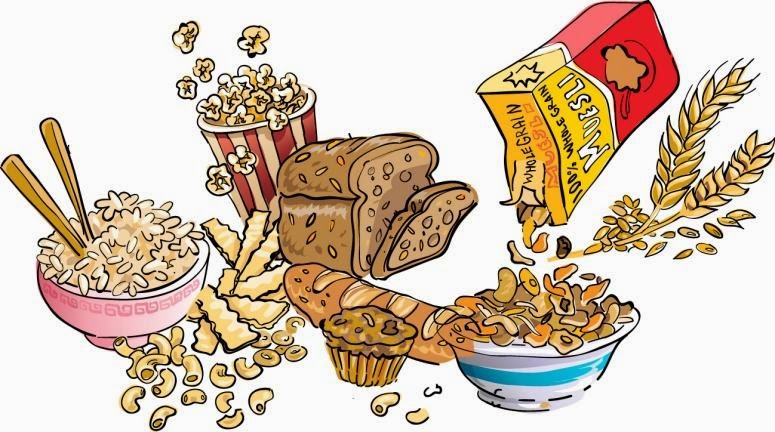
The first thing I did when I realized that I was on the brink of type 2 Diabetes, was figure out what I could eat, and what I should limit or avoid completely. It wasn't too hard to include whole grains. I use a Tabbouleh recipe as a starting point, and then change up the grains and toss in whatever I have in the fridge and pantry for interest and variation. Of the go-to grains listed on the American Diabetics Association website, I gravitate toward the following:
  • Brown rice 
  • Bulgur (cracked wheat) 
  • Buckwheat flour 
  • Whole grain barley 
  • Whole grain corn/corn meal 
  • Whole oats/oatmeal 
  • Wild rice 
  • Quinoa/Quinoa flour

Presently, Quinoa is my staple and I always have a batch ready to add to whatever I'm making. 

I like to stir-fry barley, seasoning it with simply with salt and pepper. My oldest daughter, who is an extremely picky eater, has decided that anytime I make that particular dish, that I must make extra so that she can take it for lunch the next day. Ding, ding! We have winner. 

I've completely eliminated anything made with refined white flour, white rice, and limited my potato consumption. Which is challenging, but doable. Do I look longingly at the chili cheese fries my son makes? li'l bit. Do I salivate when my youngest daughter makes ravioli? On occasion. However, there are lots of ways in which I can enjoy the foods I love by swapping a starchy vegetable or a refined white flour product with a whole grain. I'm thinking I might test out this theory by replacing the fries with barley. It isn't chili cheese fries per se, but I think it might just be a satisfying substitute.

With a little bit of planning, a dash of imagination, and a pinch of surfing the interwebs for recipe possibilities, it's pretty easy to include whole grains in your daily diet.


Related Links

Saturday, August 30, 2014

A Breath of Fresh Air

I remember when I was pregnant how I would need to take a nap so that I had enough energy to go to bed. A pregnant woman's exhaustion makes perfect sense, as she's using the equivalent amount of energy as does a mountain climber even when she's sitting still. It's been more than ten years after the birth of my youngest child, and there are times when the act of lifting a toothbrush seems to be more than my body can manage. Could stress be the culprit of fatigue? Stress most likely contributed, but it seemed like an accessory to the underlining issue, not the culprit.


Until recently, I thought that my profound exhaustion was related to depression and anxiety. Now that I've been diagnosed with sleep apnea, my chronic fatigue makes perfect sense. Now that I believe to have found the source of my exhaustion, time to work on resolving it!

I picked up my CPAP machine, the cool one with the humidifier. I have the nose piece, so instead of looking like Mom Vader, I look like the Elephant Mom. Seriously! The tube attached to the nose piece can, with a bit of imagination, look like a trunk.

I was given instructions to wear it for the first week while sitting and reading or watching TV. My son helped me set up the machine and hook up the hoses, harness, and nose piece. We both laughed at both my daughter's expressions when they came out into the living room and caught a glimpse of me in my gear. There's nothing like the laughter of my kids to help me keep things in perspective. I soon figured out how to inhale and exhale without popping my ears or having air whoosh out of my mouth (keep it closed, duh). It didn't take long to get into a breathing rhythm. Speaking while connected to the unit, however, I haven't master. Yet another element to have fun with. My kids would ask me questions just to hear me try and talk. I am, after all, on this earth for their entertainment. Well, that and a walking ATM machine, but I digress.

The first night I don't think that I slept. At least, I didn't feel as if I had. Clearly, I must have caught a couple of winks as my husband noted that while I did sound like Darth Vader, I didn't snore. I'm thinking that's progress, or at least an improvement. However, I was unable to function the following day. So I didn't, I stayed home and took a long nap.

The second night I fell asleep promptly, despite the long nap I enjoyed earlier in the day. I did wake up a couple of times. The first time I awoke, I went promptly to sleep again. The second time I stayed in a state of not asleep and not awake. Fortunately, I felt more human than the day before. Does it just get better and better from here? How many more days before I get to the "life changing" benefits of using this contraption? I am truly ready to "feel like a new person."

The third night I wasn't obsessively focused on my breathing and I fell asleep fairly quickly. I woke up about three times, but I immediately returned to sleep. By George, I think I've got the hang of this thing! While I still have a morning headache, I don't feel as if I'm mired in a dense fog. 

Looks like all I need is a bit more time to cozy up to my new best [electronic] friend. Do you think my smart phone will be jealous? 

Previous topic in the Sleep Apnea series: Sleep Perchance to Rest


Related Links


Monday, August 25, 2014

Connecting the Dots

All cases of acne have their roots in hormone production. In a wry twist of cosmic humor, my teens and I have adopted similar skin care routines for similar reasons. I want to call it "testosterone poisoning" but that isn't completely accurate (albeit, funny). Only, unlike my teens, I get the painful acne cysts that last for weeks, and sometimes looks like someone took a wicked right-hook to my jaw wearing a knuckle ring. 


As I mentioned in the Bigfoot, Yetti, and Me post, testosterone does some pretty amazing things. In the binary way of opposites, up and down, left and right, benefits and challenges, lies the beauty and beast of testosterone. The beast in this instance is oil production, nuthin' like greasy hair and skin, eh? 

Fortunately, I found a few products that help with minimizing the crazy outbreaks. As I bought similar products for my teens, I'm no longer yelling down the hall "who took my zit zapper!" Hell hath no fury like a hormonal mom. Jus' sayin'.

Like other symptoms, some acne is indicative of an underlying hormonal condition that can cause far more than facial blemishes. Yes, acne is a heartless bitch; but so is all the other inconvenient, embarrassing, and uncomfortable symptoms that make up this lovely syndrome.

I'm probably sounding like a broken record about now. Yet, once again, I'm advocating for all patients to ask their medical professionals to go beyond treating symptoms individually and looking at their patients and their symptomatology as a collective whole.

Related Links

Sunday, August 17, 2014

From Soprano to Alto

Puberty is a remarkable time. Growth in body, maturity, and character are just a tip of the amazing ice berg that is happening in a teens body. I take particular delight in watching the signs that herald the change in my son from boy to man. From his platinum blonde mustache to his deepening voice, the transformation is nothing less than miraculous.


Of course I share and identify with the changes my daughters experience, but I never imagined that I would share in the changes of my son. Particularly in the deepening of my voice.

It now makes perfect sense why I can't reach those high notes that I once hit with alacrity. Yet, for the longest time, I wrote it off as simply a sign of aging, or perhaps not singing as much as I used to.

PCOS is a complicated disease that involves problems with the endocrine system and female reproductive system. It makes a strange kind of sense that the very same androgens responsible for the changes in my son are also the culprit for the changes in me. On the one hand, it's sort of funny, on the other hand, it's a trifle bit humiliating. Once I realized that there is a physiological reason for virilism, it did lessen my embarrassment.

Once again, it's a small symptom that can easily be dismissed. So I went from a high, girly voice to a sultry, sexy voice; is that really such a thing to get all worked up over? I mean, it's just a symptom of aging or peri-menopause, or so I told myself. Ah, but the trick is to take all the seemingly trivial changes and look at them as part of a whole. Which, when I think about it, isn't possible as I'd dismissed them and never thought to bring them up to a doctor.


Related Links


Saturday, August 16, 2014

Resistance Is Futile

Insulin resistance is when your body produces insulin, but the cells in your body have become resistant to that insulin and are unable to use it effectively. Insulin resistance may be part of the metabolic syndrome, has been associated with higher risk of developing heart disease, and precedes the development of type 2 diabetes. My symptoms include lethargy, hunger, and brain fog. These symptoms can easily be written off as a reaction to stress, which is pretty much what I did.  

Diseases or conditions associated with insulin resistance include:
  • Obesity
  • Type 2 diabetes
  • High blood pressure
  • Abnormal cholesterol levels
  • Heart disease
  • Polycystic ovary syndrome

Because insulin is one of the major hormones, it’s impossible for your body to balance its minor hormones (for example, estrogen, progesterone and testosterone) until your insulin metabolism is balanced first. 

Friday, August 15, 2014

Critical Mass


Try as hard as I might, I couldn't find a body positive  image that conveyed the message that I am looking for. I found this one, but it objectifies a woman's body, she is essentially a tree. It's kinda cool, but not what I am looking for. I found other images with the standard tropes of large, curvy ladies eating ice cream and slim, muscular ladies working out. Bleck! How can I talk about such a weighty issue without proper illustrations to inspire and guide me?

Okay, well here goes: today's topic is weight. Managing weight, loosing weight, being okay with the weight we are is only a teeny portion of the discussion.

Just for today, let's say that we've made peace with our bodies, and we're simply focused on understanding the role weight plays as a symptom of PCOS.

Yeah, I think I can work with that.
Yes, extra weight on your frame for your height and age can cause all sorts of problems. With PCOS, I experienced a sudden weight gain that settled mostly around my belly and I wasn't able to lose it. Here's the kicker, I was eating healthy at the time. Color me confused. I continued to eat healthy until a series of unfortunate events, and then I went on a see food diet. You can imagine what that did to my waistline. The pending PCOS diagnosis makes changing my eating habits a must.

I'm not following any particular fad diet, nor am I overly concerned about getting into my "skinny size 8" jeans (which I turned over to Goodwill decades ago, but I digress). Fortunately for me, I work with ladies whose eating habits I simply emulate. Easy peasy. One lady eats a banana dipped in a mixed nut butter practically every morning. So yummy! Another lady brings to work salads with interesting and flavorful ingredients. With a little planning and just 5 minutes in the morning, I carry with me to work a salad concocted of greens, whole grains, goat cheese, and whatever protein we ate last night. I toss in a couple of extra pieces of fruit, and viola! I'm ready for the day.

Yet another lady at work orders soy lattes. The barista at the cafe (I know, we're so spoiled where I work!) let me taste the soy milk they stock. Yummy. Between listening to my friend order espresso floating in soy bliss and tasting said bliss, I quickly became a soy convert. That said, I'm trying not to over do the soy, so I've added Almond milk to the mix, too.

The worst news about this PCOS gig is the havoc dairy wrecks on my body. Essentially, the cheese that I crave beyond reason is off limits. Oh, just great! Happily, I'm a big fan of goat cheese, so now I just stock the fridge with variations on a theme of goat cheese. The awesomely cool thing is that both my son and husband are fans of goat cheese, and that makes it even more enjoyable. 'cuz you know, I'm not the family freak who can't eat the same things my family eats.

So there it is, my diet secret. Lean protein, lots of fresh fruits and vegetables, topped off with whole grains. Oh, and I pretty much got rid of anything white: potatoes, rice, and flour. Once the weather cools, I'm going to experiment with baking using Quinoa and Buckwheat flours.

Related Links